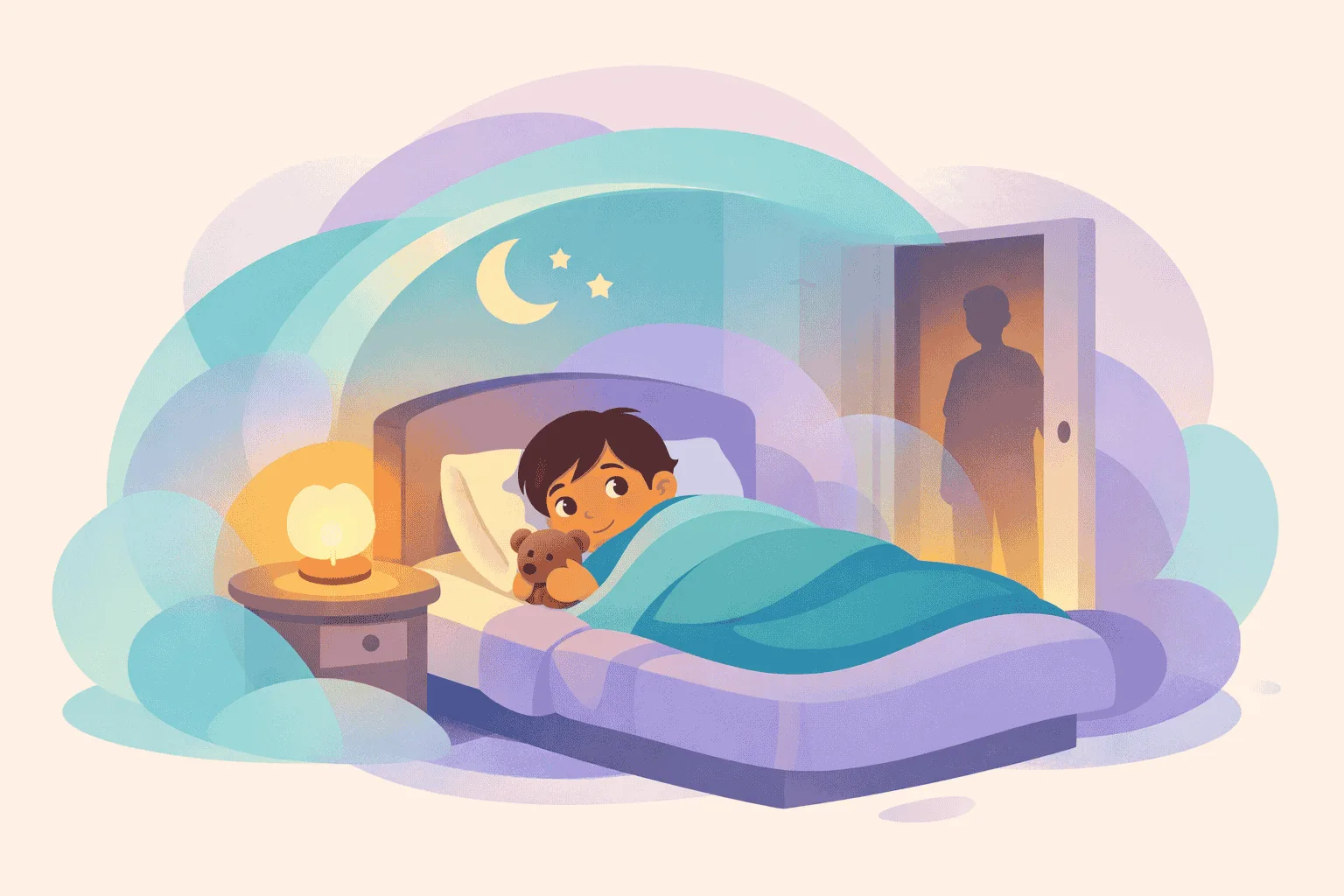
The night-time ritual that keeps repeating
It is eleven o’clock at night. We hear bare feet running down the hall, the bedroom door opens urgently, and there is our child again: eyes wide and heart racing, seeking refuge in their parents’ bed. We have lost count of how many times this has happened this week.
The cycle is exhausting and predictable: we put them to bed after a story, the lights go out, and they finally seem to fall asleep… until midnight, when they appear beside our pillow again. We wonder what we are doing wrong. The advice we receive is contradictory: “Be firm and take them back to their bed,” some say. “Let them stay; it is only a phase,” say others. Meanwhile, we swing between the guilt of giving in and the exhaustion of resisting.
But what we are experiencing is not the result of “bad habits” or a lack of boundaries. It has a profound neurobiological explanation connected with how the ADHD brain works and, specifically, with something specialists call night-time separation anxiety. Understanding what really happens in their mind when the lights go out is the first step towards helping them feel safe in their own bed.
What is really happening?
When a child says they are afraid and do not want to sleep alone, it is tempting to think of imaginary monsters or noises in the house. But something deeper and less visible is happening for many children with ADHD: they are afraid of being alone with their own mind.
Imagine having twenty browser tabs open in your brain, all playing something different at the same time, with no way to close any of them. During the day, school, play and conversations keep those tabs occupied. But when the light goes out and the world falls silent, their brain does not switch off with it; on the contrary, it becomes even more active. Thoughts spin out of control, worries become amplified and the inner restlessness becomes unbearable.
The pattern of postponement
This is why children ask for:
- “One more story” 📖
- “Water” 💧
- “To go to the toilet” 🚽
- “A back scratch” 🤲
They are not manipulating you or testing boundaries. They are postponing the moment when they must face that urgent, agitated mind that they do not know how to calm. For a neurotypical child, physical tiredness eventually switches off the mind. For a child with ADHD, tiredness does not stop the thoughts; it only adds frustration, because their body is exhausted while their brain continues at full speed.
The root: anxiety and attachment
When a child runs to their parents’ bed, they are seeking emotional co-regulation that their nervous system cannot yet provide on its own. This has everything to do with attachment in ADHD.
Key differences in the ADHD nervous system
Children with ADHD need more frequent and higher levels of co-regulation than neurotypical children. Their nervous system is:
- More reactive: It responds more intensely to stimuli.
- More sensitive to separation: Distance is perceived as danger.
- Slower to develop the ability to self-soothe.
Their brain interprets night-time separation as an alarm signal. This is known as “implicit memory”: the body remembers moments of overwhelm at a visceral level, even when the child does not have the words to explain them.
With their parents, the nervous system receives the message: “You are safe; you can rest.” Only then does the urgent mind finally settle.
Signs that your child is struggling with night-time anxiety
Although every child is unique, look for these patterns:
- 🚨 Extreme resistance: Beyond the usual “I’m not tired”, there is visible distress, with crying or pleading.
- ⏰ An endless chain of requests: Every excuse delays the moment when they will be left alone.
- 😰 Difficulty sleeping despite exhaustion: You can see that they are physically drained, but their mind does not switch off.
- 🌙 Frequent waking: Followed by immediately seeking their parents to confirm your presence.
- 😱 Nightmares or night terrors: More frequent during periods of change or family stress.
- 🤢 Physical symptoms at bedtime: Stomach ache, headache or nausea that disappears when someone stays with them.
- ☀️ Better cooperation on calm days: And more resistance after conflict or family tension.
- 🛏️ Noticeable improvement with company: Whether with siblings, pets or in your bed.
Strategies for creating emotional safety
There are no magic formulas, but there are evidence-based strategies for building the capacity to settle:
1. BEFORE turning out the light: Build connection
The work begins much earlier. They need at least 15–20 minutes of exclusive one-to-one connection.
- A real conversation: What is worrying you? What was the best part of today?
- A physical-contact ritual: A back massage or gentle touch. This is not “excessive fussing”; it is neurobiological regulation.
- “Emptying the emotional backpack”: Ask whether something is going round in their head and listen without answering with “but…”.
2. DURING the transition: Calm the urgent mind
- A transitional object with your scent: A T-shirt or scarf. Smell has a powerful regulatory effect.
- Audio in your voice: Record yourself reading a story or singing so that they feel they are not alone.
- Dim light: Complete darkness can be an unnecessary sensory stressor.
- An open door and a light in the hallway: Signals that you are available.
- Adapted guided breathing: Teach them to “breathe like a balloon” (let the tummy expand while breathing in and contract while breathing out). Practise together until it becomes automatic.
3. AFTERWARDS: How to respond when they come to our bed
- A gradual option: Calmly accompany them back, without anger. Stay for a few minutes, remind them of their “anchors” (music, object), and leave when they relax.
- A transitional option: If exhaustion is extreme, let them sleep with you as part of a conscious plan: “This week you can sleep here; next week we’ll try your bed.”
- Consistent positive reinforcement: Celebrate every small step. If they stayed in their bed until 3 a.m., that is an achievement!
- Patience with setbacks: There will be nights of regression because of stress or change. This is not a failure; it is part of the ADHD process.
Common mistakes that intensify anxiety
❌ Mistake 1: “Let them cry until they fall asleep by themselves”
This method assumes that the child will “learn” that nothing happens. But with genuine separation anxiety, the only thing they learn is that nobody comes when they are afraid. This neurologically reinforces the experience of abandonment and worsens their distress in the long term.
❌ Mistake 2: “Punish them or take away privileges for coming to our bed”
Coming to their parents’ bed is neither manipulative nor voluntary behaviour. It is an automatic response by their nervous system as it seeks regulation. Punishing them is like punishing someone for shivering in the cold: they do not control the response.
❌ Mistake 3: “Rush the bedtime routine to save time”
When we are exhausted, it is tempting to reduce the ritual to a minimum. But rushing the process has a counterproductive effect: nervous tension builds up in the child’s body without enough time to process or release it.
Sometimes it is better for the child to go to bed later, for the process to be slower, or even for them to sleep fewer hours overall if that means their nervous system is genuinely regulated when the light goes out. A child who sleeps for eight peaceful hours is more rested than one who “sleeps” for ten hours filled with tension and waking.
❌ Mistake 4: “Insist that they sleep alone because they’re ‘old enough now’”
Chronological age does not determine the maturity of the nervous system. An eight-year-old child with ADHD may have the emotional self-regulation of a five-year-old. Comparing them with other children their age only creates additional shame.
A five-minute plan for tonight
Expected result: We should not expect them to sleep alone all night on the first attempt. But we may notice less initial resistance at bedtime and, possibly, that they wait a little longer before getting up to look for us.
Frequently asked questions
How long will it take before they sleep alone all night?
There is no single answer. Some children show a noticeable improvement within two to three weeks; others need several months. It depends on the intensity of the anxiety, the consistency of the strategies, the level of family stress and the child’s own neurobiological maturation. The important thing is to measure progress in small steps—less resistance, more time in their own bed before seeking us—rather than expecting immediate “complete success”.
Is this normal at their age, or do they need therapy?
Night-time separation anxiety is common in children with ADHD and does not always require therapeutic intervention. Consider consulting a specialist if the anxiety seriously interferes with the whole family’s daily functioning, is accompanied by other intense symptoms (panic attacks or regression in other areas), or if there is no improvement after two to three months of consistently applying these strategies.
Will letting them sleep with us make them more dependent?
This is one of the most harmful myths in parenting. Attachment research shows exactly the opposite: children whose safety needs receive consistent responses develop greater autonomy in the long term, not less. What creates unhealthy dependence is inconsistency—sometimes yes, sometimes no—and the rejection of genuine needs. If they need to sleep with us tonight to regulate themselves, we are not creating a “bad habit”; we are providing the emotional scaffolding their brain still needs.
My partner and I disagree about how to handle this. What should we do?
Differences between caregivers are very common and can confuse the child if they are not managed. Take a moment to talk when the child is not present: share your genuine concerns, not just your positions; read about ADHD and separation anxiety together; and agree on a basic plan that you can both follow. You do not need to be completely aligned on everything, but you do need agreement on the main responses: how to respond when the child comes to you at night, how much connection time to offer before sleep, and what message to give about their fears—validation rather than minimisation.
Sleep as a secure-attachment practice
We are not “failing” if they return to our bed tonight. We are accompanying a brain that works differently and needs more time and more repetition to feel safe. Every night that we respond calmly to their fear, every connection ritual we maintain even when we are exhausted, and every time we validate their experience instead of minimising it, we are building the foundations of secure attachment that will eventually allow them to soothe themselves.
The real goal
The goal is not for them to sleep alone as soon as possible. The goal is that, when they finally do, they do so with the deep confidence that they are not alone, that we are available when they need us, and that their fears are valid and manageable. That is the kind of security they will carry with them not only to bed, but through life.
Moving forward together
We have taken the first step: understanding what is really happening. Now we have practical tools to support them. Let us trust the process, trust our children and trust ourselves.
Originally published on divergentbrain.org. This content is for information only and does not replace an individual professional assessment or care.